**Pressure Mounts on Arne Slot Amid Poor Form, Fan Boos, and Speculation Over His Future**
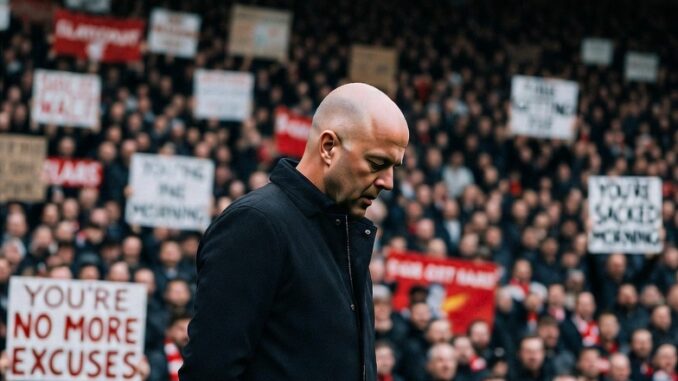
The rain had barely stopped falling at Villa Park on May 15, 2026, when the weight of Liverpool Football Club’s disappointing 2025/26 season came crashing down on Arne Slot. A 4-2 defeat to Aston Villa — Liverpool’s 12th league loss of the campaign — left the Reds in fifth place with one game remaining. As the final whistle blew, scattered boos could be heard from the away end. For the Dutchman appointed as Jürgen Klopp’s successor in 2024, the noise was symbolic of a growing storm. Pressure is now firmly mounting on Slot, with fan discontent, media scrutiny, and intense speculation about his future at Anfield reaching new heights.
Slot’s post-match comments — calm, measured, and focused on “fine margins” — did little to quell the frustration. Hours later, Mohamed Salah’s viral social media statement calling for a return to “heavy metal” football was interpreted by many as an indirect indictment of the current regime. With no trophies this season and Champions League qualification still in doubt ahead of the final-day clash against Brentford, questions about Slot’s ability to lead Liverpool forward have intensified.
### The Appointment That Carried Huge Expectation
When Liverpool announced Arne Slot as their new head coach in the summer of 2024, the move was widely praised. The former Feyenoord boss was seen as an intelligent, progressive choice — tactically astute, modern in his approach, and someone who could evolve the high-pressing identity Klopp had built without a complete overhaul. Slot arrived with a strong reputation for attractive, possession-oriented football blended with intensity. Early signs in the 2024/25 season were encouraging, culminating in a Premier League title win that suggested a smooth transition.
The 2025/26 campaign, however, has told a different story. What began with optimism quickly descended into inconsistency, tactical rigidity, and a noticeable drop in the aggressive, front-foot football that defines Liverpool. After 37 games, the Reds sit on 59 points with a record of 17 wins, 8 draws, and 12 losses. They have conceded 52 goals — far too many for a side with genuine title aspirations — and failed to mount a consistent challenge at the top of the table. The absence of silverware has only amplified the disappointment.
### A Season of Frustration and Declining Standards
Liverpool’s problems have been multifaceted. Injuries exposed squad depth issues, particularly in central midfield and defence. Yet many critics argue that tactical and cultural factors have been more damaging than absences. Slot’s preference for inverted full-backs, structured build-up play, and a more patient style has yielded moments of beauty but has often left the team vulnerable on transitions and lacking the ferocious counter-pressing that once terrified opponents.
The Aston Villa defeat was emblematic. Liverpool twice led but collapsed after half-time, unable to stem the tide of Villa’s intensity and clinical finishing. Ollie Watkins’ brace highlighted defensive frailties that have become recurring. Similar collapses have occurred against other well-organized sides throughout the season. Liverpool’s away form against top-half teams has been particularly poor, with zero wins in several key fixtures.
Metrics underline the decline. High-intensity pressing actions have decreased significantly compared to the Klopp era. Expected Goals (xG) conceded on counter-attacks has risen, while the team’s ability to dominate second balls has diminished. While Slot’s side retains technical quality — Mohamed Salah continues to deliver elite numbers with over 20 goals — the collective “togetherness” and unrelenting hunger appear diminished.
### Fan Discontent and the Sound of Boos
Liverpool supporters are among the most passionate and loyal in world football, but their patience has limits. Boos have echoed at Anfield and away grounds in recent weeks, directed not just at individual performances but at the broader direction under Slot. Social media platforms have been flooded with criticism, memes comparing current performances unfavourably to Klopp’s glory years, and growing #SlotOut sentiment.
The frustration is understandable. Fans who celebrated a Premier League title just over a year ago now watch a team that looks unrecognizable in spirit. “You’ll Never Walk Alone” still rings around the stadium, but the on-pitch displays have tested even the most steadfast believers. Protests and banners have appeared sporadically, with some supporters calling for a return to the “heavy metal” ethos that Slot’s predecessor popularized.
This discontent is not universal — many acknowledge the difficulties of following Klopp and appreciate Slot’s calm demeanor — but the volume of criticism has grown loud enough to influence the narrative. Former players like Jamie Carragher have been vocal on broadcasts, questioning whether the current tactical setup maximizes the squad’s strengths. Even optimistic voices admit that something fundamental feels missing.
### Dressing Room Dynamics and Salah’s Intervention
Perhaps most telling is the apparent frustration within the squad. Salah’s pointed statement after the Villa game — demanding intensity, aggression, and a return to a feared style — carried significant weight. The fact that senior figures reportedly engaged positively with the post suggests the message resonated internally. At 33, Salah remains the team’s talisman and de facto leader. His willingness to speak publicly is rare and signals that tolerance for the current trajectory is wearing thin.
Virgil van Dijk, another veteran cornerstone, has also faced scrutiny despite strong individual contributions. The leadership group appears to be navigating a delicate balance between supporting the manager and pushing for necessary changes in approach. Insiders describe training sessions as professional yet lacking the fiery edge of previous years. Slot has attempted to address this by increasing physicality in sessions, but results on matchdays have been inconsistent.
### Tactical Critique and Philosophical Differences
At its core, the pressure on Slot stems from a clash of footballing philosophies. Klopp’s Liverpool was chaos engineered into brilliance — high press, rapid transitions, emotional connection, and an unrelenting work rate. Slot’s vision is more continental: controlled possession, positional play, and structured patterns. While effective at Feyenoord and in flashes this season, it has struggled to fully transplant onto a squad built for a different style.
Critics argue that Slot has been too inflexible, slow to adapt in games, and overly reliant on certain patterns that opponents now anticipate. The high defensive line has been exploited repeatedly. Full-back positioning and midfield balance have drawn particular ire. While some metrics show improvements in passing networks and ball retention, these aesthetic gains have not translated into points or trophies against the strongest opposition.
Supporters and pundits alike point to successful managers who adapted their methods upon arriving at big clubs. Slot’s challenge is to evolve his ideas while reconnecting with the DNA that makes Liverpool special. Failure to do so risks alienating players, fans, and the wider club ecosystem.
### Speculation Over Slot’s Future
With the season winding down, speculation about Slot’s position has intensified. Bookmakers have shortened odds on his departure, while media outlets float potential successors. Names such as Xabi Alonso (leveraging his Bayer Leverkusen success and Liverpool playing pedigree), Ruben Amorim, and even long-shot mentions of a Klopp return have circulated, though the latter remains highly improbable.
Fenway Sports Group (FSG) faces a complex decision. Slot was given a multi-year contract with the expectation of sustained success. Dismissing him after one full season would represent a significant financial and reputational cost. Yet continuing with a manager whose methods are not delivering could lead to further decline. A failure to secure Champions League football would almost certainly trigger a thorough review.
Slot himself has remained defiant in public. In recent press conferences, he has spoken of “building something long-term,” “the team will look different next season,” and his belief in the project. He points to the difficulties of transition, injuries, and the competitiveness of the Premier League. Privately, however, he must be aware that results — not intentions — will determine his fate.
### The Summer Reckoning
Regardless of the final day outcome against Brentford, Liverpool faces a critical summer. Contract situations for Salah, van Dijk, and Trent Alexander-Arnold remain unresolved and will be influenced by European qualification. Recruitment must address midfield dynamism, defensive robustness, and attacking depth. The club needs players who combine technical quality with the intensity Slot’s system currently lacks.
A new sporting director or enhanced recruitment structure may also come under discussion as FSG seeks to optimize the operation. The goal is clear: restore Liverpool to consistent title challengers and Champions League contenders while honoring the club’s traditions.
### Final Day Stakes and the Path Forward
The match against Brentford on May 25 at Anfield carries enormous weight. A strong performance and victory could secure Champions League football, provide a positive end to the campaign, and buy Slot breathing room. Anything less risks a summer of upheaval.
For Arne Slot, this represents the biggest test of his managerial career. He arrived at one of world football’s biggest clubs with a clear vision. That vision is now under the microscope. Can he adapt, reinject intensity, and win back the doubters? Or will the pressure prove insurmountable?
Liverpool Football Club has a history of dramatic turns. From near relegation in the early 1960s to dominance under Shankly, from Heysel and Hillsborough tragedy to Istanbul glory, resilience is woven into the club’s fabric. Supporters expect — and demand — that same fighting spirit from the current regime.
As the season reaches its climax, the spotlight on Arne Slot has never been brighter or more unforgiving. The coming weeks will determine whether he is the man to lead Liverpool into a new golden era or another casualty in the relentless pursuit of success at Anfield. The boos have been heard. The questions have been asked. Now comes the response.
This turbulent season has tested everyone connected with Liverpool FC. Whether under Slot or a future manager, the demand remains the same: restore the intensity, the identity, and the winning mentality that the club and its supporters crave. The final chapter of 2025/26 is still being written.
Leave a Reply